
 Health Benefits
Glowing Skin from the Inside Out
The secret to radiant skin isn't just in your creams — it's in the antioxidants you drink.
Read more
Ruby Juice Team
Author
Share this article:
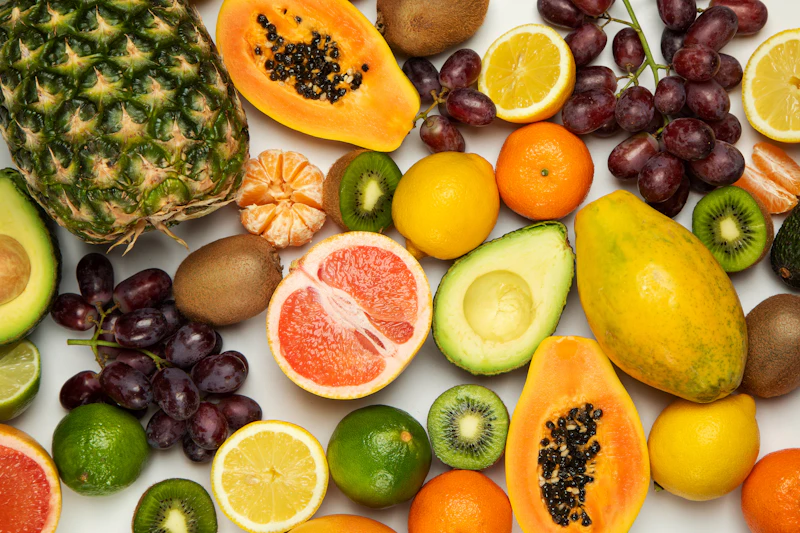
Eating fresh fruits every day can dramatically transform your energy, skin, and long-term health.
Fruit has been a cornerstone of human nutrition for millennia, and modern science continues to validate what traditional cultures have long understood: eating fresh fruit daily is one of the most powerful habits you can adopt for long-term health. Yet global surveys consistently show that the majority of people — even in developed nations — fail to meet recommended daily fruit intake.
The World Health Organization recommends a minimum of 400 grams (approximately five servings) of fruits and vegetables per day. Research suggests that people who consistently meet this target have substantially lower rates of heart disease, stroke, type 2 diabetes, and several cancers than those who do not. Below are the five most significant and scientifically supported benefits of making fresh fruit a daily habit.
Fruit is among the richest natural sources of dietary fibre, and fibre is the cornerstone of a healthy digestive system. Soluble fibre — found in abundance in apples, pears, mangoes, and citrus fruits — dissolves in water to form a gel-like substance that slows digestion, feeds beneficial gut bacteria, and helps regulate blood sugar and cholesterol levels.
Insoluble fibre, found in the skins and seeds of many fruits, adds bulk to stool and accelerates transit through the colon, preventing constipation and reducing the risk of colorectal cancer. A landmark study in The Lancet analysing data from 185 prospective studies found that people with the highest fibre intake had a 15–31% lower risk of colorectal cancer and a 16–24% lower risk of type 2 diabetes compared to those with the lowest intake.
Beyond fibre, fruits contain prebiotics — compounds that selectively feed beneficial bacteria in the gut microbiome, including Lactobacillus and Bifidobacterium species. A well-nourished gut microbiome is now understood to influence not just digestion, but also immune function, mental health, and metabolic health.
Heart disease is the world's leading cause of death, responsible for approximately 17.9 million deaths annually according to the WHO. Daily fruit intake is one of the most well-supported dietary interventions for cardiovascular protection, working through multiple mechanisms simultaneously.
Potassium-rich fruits — bananas, avocados, kiwi, and oranges — help regulate blood pressure by counterbalancing the effects of sodium and relaxing the walls of blood vessels. A major meta-analysis published in the British Medical Journal found that each additional daily serving of fruit was associated with a 4% reduction in the risk of coronary heart disease.
Flavonoids — a class of antioxidant compounds found in berries, grapes, and citrus fruits — protect the inner lining of arteries (the endothelium), reduce the oxidation of LDL cholesterol (the primary trigger of arterial plaque formation), and improve blood vessel flexibility. Research from Harvard's T.H. Chan School of Public Health found that women who consumed three or more servings of blueberries and strawberries per week had a 34% lower risk of heart attack compared to those who ate berries once a month or less.
The connection between diet and skin quality is one of the most rapidly evolving areas of nutritional science. The skin is a metabolically active organ that requires a continuous supply of specific nutrients to maintain its structure, repair damage, and protect against environmental stress.
Vitamin C is the most critical nutrient for skin health. It is essential for the synthesis of collagen — the structural protein that gives skin its firmness and elasticity. Without adequate vitamin C, collagen production declines, leading to sagging, wrinkles, and slower wound healing. Guava, papaya, kiwi, and citrus fruits are exceptional sources: a single guava contains more than 200 mg of vitamin C — over twice the recommended daily intake.
Beta-carotene, the pigment that gives mangoes, papayas, and carrots their orange colour, is converted to vitamin A in the body. Vitamin A regulates cell turnover, helps clear pores, and reduces the production of sebum that can lead to acne. A study published in the Journal of Investigative Dermatology found that higher dietary beta-carotene intake was strongly associated with clearer skin and reduced UV-induced damage.
One of the most common complaints in modern life is persistent fatigue — a constant low-grade tiredness that coffee temporarily masks but does not resolve. Daily fruit intake addresses one of the root causes: micronutrient deficiency.
The natural sugars in fruit — primarily fructose, glucose, and sucrose — are packaged with fibre, water, and micronutrients that slow their absorption and produce a steady, sustained energy release rather than the sharp spike-and-crash associated with refined sugar. This is why eating an apple provides noticeably more sustained energy than consuming the same amount of sugar in a soft drink.
Beyond sugar, fruits rich in B vitamins (particularly B1, B2, and B6) — including avocado, mango, and banana — directly support the cellular processes that convert food into usable energy (ATP). Iron-rich fruits like mulberries and prunes support red blood cell production, improving the oxygen-carrying capacity of your blood and reducing one of the most common causes of fatigue: iron-deficiency anaemia, which affects approximately 1.2 billion people worldwide.
Perhaps the most compelling case for daily fruit intake is the consistent evidence linking it to a substantially reduced risk of chronic disease over a lifetime.
A major systematic review of 95 cohort studies published in the International Journal of Epidemiology found that consuming 800 grams of fruit and vegetables per day (approximately ten portions) was associated with:
The protective effects come from a combination of antioxidants that neutralise cancer-promoting free radicals, fibre that feeds anti-inflammatory gut bacteria, and anti-inflammatory phytochemicals that modulate gene expression at the cellular level.
Meeting the recommended five daily servings is easier than it sounds. A 250 ml glass of cold-pressed juice counts as approximately one serving. Adding fresh fruit to breakfast, carrying a piece of fruit as an afternoon snack, and keeping pre-cut fruit visible in your refrigerator are simple, proven strategies.
At Ruby Fresh, our cold-pressed juices are made from whole, fresh fruit with no added sugars or preservatives — giving you the full nutritional benefit of the fruit in a convenient, ready-to-drink form. Whether you enjoy them alongside meals or as a standalone snack, they are one of the easiest ways to consistently hit your daily fruit target.
Ruby Juice offers a variety of cold-pressed juices and fruit cuts to support your healthy lifestyle.
